

What Is The Function Of The Microtubule In An Animal Cell
Cell biology (also cellular biological science or cytology) is a branch of biology that studies the structure, office and beliefs of cells.[i] [two] All living organisms are made of cells. A cell is the basic unit of measurement of life that is responsible for the living and functioning of organisms. Cell biology is the study of structural and functional units of cells. Jail cell biological science encompasses both prokaryotic and eukaryotic cells and has many subtopics which may include the study of cell metabolism, cell communication, cell cycle, biochemistry, and jail cell composition. The study of cells is performed using several microscopy techniques, cell culture, and cell fractionation. These accept immune for and are currently being used for discoveries and research pertaining to how cells function, ultimately giving insight into understanding larger organisms. Knowing the components of cells and how cells work is fundamental to all biological sciences while as well being essential for research in biomedical fields such as cancer, and other diseases. Research in prison cell biology is interconnected to other fields such equally genetics, molecular genetics, molecular biological science, medical microbiology, immunology, and cytochemistry.
History [edit]
Cells were first seen in 17th century Europe with the invention of the compound microscope. In 1665, Robert Hooke termed the building block of all living organisms as "cells" (published in Micrographia) later looking at a slice of cork and observing a cell-like construction,[three] [4] however, the cells were dead and gave no indication to the actual overall components of a cell. A few years later, in 1674, Anton Van Leeuwenhoek was the showtime to analyze live cells in his examination of algae. All of this preceded the prison cell theory which states that all living things are fabricated upward of cells and that cells are the functional and structural unit of organisms. This was ultimately concluded by institute scientist, Matthias Schleiden[iv] and fauna scientist Theodor Schwann in 1838, who viewed live cells in establish and creature tissue, respectively.[5] 19 years later, Rudolf Virchow farther contributed to the cell theory, calculation that all cells come from the division of pre-existing cells.[5] Viruses are non considered in jail cell biology – they lack the characteristics of a living jail cell, and instead are studied in the microbiology subclass of virology.[6]
Techniques [edit]
Cell biology research looks at unlike means to civilisation and manipulate cells outside of a living trunk to further research in human beefcake and physiology, and to derive medications. The techniques past which cells are studied have evolved. Due to advancements in microscopy, techniques and engineering have allowed scientists to agree a better understanding of the structure and function of cells. Many techniques commonly used to report cell biological science are listed below:[vii]
- Cell civilization: Utilizes quickly growing cells on media which allows for a big corporeality of a specific cell type and an efficient way to study cells.[viii] Prison cell culture is one of the major tools used in cellular and molecular biology, providing excellent model systems for studying the normal physiology and biochemistry of cells (e.yard., metabolic studies, aging), the effects of drugs and toxic compounds on the cells, and mutagenesis and carcinogenesis. It is likewise used in drug screening and development, and big scale manufacturing of biological compounds (e.g., vaccines, therapeutic proteins).
- Fluorescence microscopy: Fluorescent markers such as GFP, are used to characterization a specific component of the cell. Afterwards, a sure light wavelength is used to excite the fluorescent mark which tin can then be visualized.[8]
- Phase-contrast microscopy: Uses the optical aspect of light to represent the solid, liquid, and gas-phase changes as brightness differences.[eight]
- Confocal microscopy: Combines fluorescence microscopy with imaging by focusing light and snap shooting instances to form a three-D epitome.[viii]
- Transmission electron microscopy: Involves metal staining and the passing of electrons through the cells, which will exist deflected upon interaction with metal. This ultimately forms an epitome of the components being studied.[8]
- Cytometry: The cells are placed in the machine which uses a beam to scatter the cells based on dissimilar aspects and tin therefore split up them based on size and content. Cells may likewise be tagged with GFP-fluorescence and can exist separated that way besides.[ix]
- Cell fractionation: This procedure requires breaking up the prison cell using loftier temperature or sonification followed past centrifugation to divide the parts of the cell allowing for them to be studied separately.[8]
Prison cell types [edit]

A cartoon of a prokaryotic cell
At that place are two fundamental classifications of cells: prokaryotic and eukaryotic. Prokaryotic cells are distinguished from eukaryotic cells past the absence of a cell nucleus or other membrane-bound organelle.[10] Prokaryotic cells are much smaller than eukaryotic cells, making them the smallest form of life.[eleven] Prokaryotic cells include Bacteria and Archaea, and lack an enclosed prison cell nucleus. Eukaryotic cells are plant in plants, animals, fungi, and protists. They range from x–100 μm in diameter, and their DNA is contained within a membrane-bound nucleus. Eukaryotes are organisms containing eukaryotic cells. The 4 eukaryotic kingdoms are Animalia, Plantae, Fungi, and Protista.
They both reproduce through binary fission. Bacteria, the most prominent type, take several dissimilar shapes, although most are spherical or rod-shaped. Leaner can exist classed every bit either gram-positive or gram-negative depending on the jail cell wall composition. Gram-positive leaner have a thicker peptidoglycan layer than gram-negative bacteria. Bacterial structural features include a flagellum that helps the cell to move,[12] ribosomes for the translation of RNA to poly peptide,[12] and a nucleoid that holds all the genetic material in a round structure.[12] In that location are many processes that occur in prokaryotic cells that let them to survive. In prokaryotes, mRNA synthesis is initiated at a promoter sequence on the Deoxyribonucleic acid template comprising two consensus sequences that recruit RNA polymerase. The prokaryotic polymerase consists of a core enzyme of iv protein subunits and a σ protein that assists simply with initiation. For instance, in a process termed conjugation, the fertility cistron allows the bacteria to possess a pilus which allows it to transmit DNA to another leaner which lacks the F gene, permitting the transmittance of resistance allowing it to survive in sure environments.[xiii]
Structure and role [edit]
Structure of eukaryotic cells [edit]
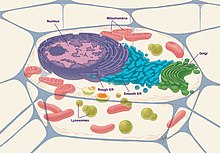
A diagram of an beast prison cell
Eukaryotic cells are composed of the post-obit organelles:
- Nucleus: The nucleus of the cell functions as the genome and genetic information storage for the cell, containing all the Dna organized in the form of chromosomes. It is surrounded by a nuclear envelope, which includes nuclear pores assuasive for the transportation of proteins betwixt the within and outside of the nucleus.[14] This is also the site for replication of Deoxyribonucleic acid as well as transcription of Deoxyribonucleic acid to RNA. Afterwards, the RNA is modified and transported out to the cytosol to be translated to protein.[15]
- Nucleolus: This structure is within the nucleus, usually dense and spherical in shape. Information technology is the site of ribosomal RNA (rRNA) synthesis, which is needed for ribosomal assembly.
- Endoplasmic reticulum (ER): This functions to synthesize, store, and secrete proteins to the Golgi appliance.[16] Structurally, the endoplasmic reticulum is a network of membranes found throughout the cell and connected to the nucleus. The membranes are slightly different from cell to jail cell and a cell'southward function determines the size and structure of the ER.[17]
- Mitochondria: Unremarkably known as the powerhouse of the prison cell is a double membrane jump cell organelle.[xviii] This functions for the production of free energy or ATP within the cell. Specifically, this is the place where the Krebs bicycle or TCA wheel for the product of NADH and FADH occurs. Afterward, these products are used within the electron transport chain (ETC) and oxidative phosphorylation for the final production of ATP.[19]
- Golgi appliance: This functions to further process, package, and secrete the proteins to their destination. The proteins contain a signal sequence that allows the Golgi apparatus to recognize and direct it to the correct place. Golgi apparatus likewise produce glycoproteins and glycolipids.[20]
- Lysosome: The lysosome functions to dethrone fabric brought in from the outside of the cell or old organelles. This contains many acid hydrolases, proteases, nucleases, and lipases, which break down the various molecules. Autophagy is the process of degradation through lysosomes which occurs when a vesicle buds off from the ER and engulfs the fabric, then, attaches and fuses with the lysosome to let the material to be degraded.[21]
- Ribosomes: Functions to interpret RNA to protein. it serves as a site of protein synthesis.[22]
- Cytoskeleton: Cytoskeleton is a structure that helps to maintain the shape and general organisation of the cytoplasm. It anchors organelles within the cells and makes upward the construction and stability of the cell. The cytoskeleton is composed of iii principal types of protein filaments: actin filaments, intermediate filaments, and microtubules, which are held together and linked to subcellular organelles and the plasma membrane by a diverseness of accessory proteins.[23]
- Cell membrane: The cell membrane tin can exist described equally a phospholipid bilayer and is also consisted of lipids and proteins.[12] Considering the inside of the bilayer is hydrophobic and in social club for molecules to participate in reactions within the cell, they need to exist able to cantankerous this membrane layer to become into the prison cell via osmotic pressure level, diffusion, concentration gradients, and membrane channels.[24]
- Centrioles: Part to produce spindle fibers which are used to separate chromosomes during cell division.
Eukaryotic cells may besides exist composed of the post-obit molecular components:
- Chromatin: This makes up chromosomes and is a mixture of Dna with diverse proteins.
- Cilia: They help to propel substances and can as well be used for sensory purposes.[25]
Jail cell metabolism [edit]
Cell metabolism is necessary for the product of energy for the cell and therefore its survival and includes many pathways. For cellular respiration, one time glucose is available, glycolysis occurs within the cytosol of the jail cell to produce pyruvate. Pyruvate undergoes decarboxylation using the multi-enzyme circuitous to form acetyl coA which can readily be used in the TCA cycle to produce NADH and FADH2. These products are involved in the electron transport chain to ultimately class a proton gradient across the inner mitochondrial membrane. This gradient can then bulldoze the product of ATP and Water during oxidative phosphorylation.[26] Metabolism in plant cells includes photosynthesis which is simply the exact opposite of respiration as it ultimately produces molecules of glucose.
Cell signaling [edit]
Cell signaling or cell communication is important for cell regulation and for cells to process data from the environment and reply accordingly. Signaling can occur through straight cell contact or endocrine, paracrine, and autocrine signaling. Direct cell-cell contact is when a receptor on a cell binds a molecule that is attached to the membrane of some other cell. Endocrine signaling occurs through molecules secreted into the bloodstream. Paracrine signaling uses molecules diffusing between two cells to communicate. Autocrine is a cell sending a signal to itself by secreting a molecule that binds to a receptor on its surface. Forms of communication can be through:
- Ion channels: Can be of dissimilar types such as voltage or ligand gated ion channels. They let for the outflow and arrival of molecules and ions.
- G-protein coupled receptor (GPCR): Is widely recognized to contain seven transmembrane domains. The ligand binds on the extracellular domain and once the ligand binds, this signals a guanine commutation factor to convert Gross domestic product to GTP and activate the G-α subunit. G-α can target other proteins such as adenyl cyclase or phospholipase C, which ultimately produce secondary messengers such as campsite, Ip3, DAG, and calcium. These secondary messengers role to amplify signals and tin target ion channels or other enzymes. 1 example for distension of a point is campsite binding to and activating PKA by removing the regulatory subunits and releasing the catalytic subunit. The catalytic subunit has a nuclear localization sequence which prompts information technology to go into the nucleus and phosphorylate other proteins to either repress or actuate gene activity.[26]
- Receptor tyrosine kinases: Demark growth factors, further promoting the tyrosine on the intracellular portion of the protein to cross phosphorylate. The phosphorylated tyrosine becomes a landing pad for proteins containing an SH2 domain allowing for the activation of Ras and the involvement of the MAP kinase pathway.[27]
Growth and evolution [edit]
Eukaryotic cell bike [edit]

Cells are the foundation of all organisms and are the primal units of life. The growth and evolution of cells are essential for the maintenance of the host and survival of the organism. For this process, the cell goes through the steps of the cell wheel and evolution which involves cell growth, DNA replication, cell partitioning, regeneration, and prison cell expiry.
The prison cell cycle is divided into four distinct phases: G1, S, G2, and G. The G phase – which is the cell growth phase – makes upwardly approximately 95% of the wheel. The proliferation of cells is instigated by progenitors. All cells start out in an identical grade and tin can substantially become any type of cells. Jail cell signaling such every bit consecration tin can influence nearby cells to determinate the type of cell it will become. Moreover, this allows cells of the aforementioned type to aggregate and form tissues, then organs, and ultimately systems. The G1, G2, and S phase (DNA replication, damage and repair) are considered to exist the interphase portion of the cycle, while the M phase (mitosis) is the cell division portion of the cycle. Mitosis is composed of many stages which include, prophase, metaphase, anaphase, telophase, and cytokinesis, respectively. The ultimate result of mitosis is the formation of ii identical daughter cells.
The prison cell wheel is regulated in cell cycle checkpoints, by a series of signaling factors and complexes such as cyclins, cyclin-dependent kinase, and p53. When the prison cell has completed its growth process and if information technology is found to be damaged or altered, it undergoes cell death, either by apoptosis or necrosis, to eliminate the threat it can cause to the organism's survival.[28]
Cell bloodshed, prison cell lineage immortality [edit]
The beginnings of each present day cell presumably traces back, in an unbroken lineage for over 3 billion years to the origin of life. It is not actually cells that are immortal merely multi-generational jail cell lineages.[29] The immortality of a cell lineage depends on the maintenance of cell division potential. This potential may exist lost in any particular lineage because of cell damage, final differentiation as occurs in nervus cells, or programmed cell death (apoptosis) during evolution. Maintenance of prison cell segmentation potential over successive generations depends on the avoidance and the accurate repair of cellular damage, especially DNA impairment. In sexual organisms, continuity of the germline depends on the effectiveness of processes for avoiding Deoxyribonucleic acid damage and repairing those DNA damages that do occur. Sexual processes in eukaryotes, as well every bit in prokaryotes, provide an opportunity for effective repair of Deoxyribonucleic acid damages in the germ line by homologous recombination.[29] [30]
Prison cell cycle phases [edit]
The cell bike is a 4-stage process that a prison cell goes through as it develops and divides. It includes Gap 1 (G1), synthesis (S), Gap 2 (G2), and mitosis (M).The cell either restarts the cycle from G1 or leaves the cycle through G0 subsequently completing the cycle. The cell can progress from G0 through final differentiation.
The interphase refers to the phases of the jail cell bicycle that occur between one mitosis and the next, and includes G1, South, and G2.
G1 phase [edit]
The size of the cell grows.
The contents of cells are replicated.
Southward phase [edit]
Replication of Deoxyribonucleic acid
The cell replicates each of the 46 chromosomes (23 pairs).
G2 phase [edit]
The cell multiplies.
In preparation for prison cell division, organelles and proteins form.
M stage [edit]
After mitosis, cytokinesis occurs (prison cell separation)
Formation of two daughter cells that are identical
G0 stage [edit]
These cells go out G1 and enter G0, a resting stage. A cell in G0 is doing its chore without actively preparing to divide.[31]
Pathology [edit]
The scientific branch that studies and diagnoses diseases on the cellular level is called cytopathology. Cytopathology is generally used on samples of complimentary cells or tissue fragments, in contrast to the pathology branch of histopathology, which studies whole tissues. Cytopathology is commonly used to investigate diseases involving a wide range of trunk sites, often to aid in the diagnosis of cancer but also in the diagnosis of some infectious diseases and other inflammatory conditions. For example, a mutual application of cytopathology is the Pap smear, a screening test used to detect cervical cancer, and precancerous cervical lesions that may pb to cervical cancer.[32]
Prison cell bike checkpoints and Deoxyribonucleic acid damage repair arrangement [edit]
The cell wheel is composed of a number of well-ordered, consecutive stages that effect in cellular segmentation. The fact that cells exercise non begin the next stage until the last ane is finished, is a significant element of cell cycle regulation. Cell cycle checkpoints are characteristics that constitute an splendid monitoring strategy for accurate cell cycle and divisions. Cdks, associated cyclin counterparts, protein kinases, and phosphatases regulate cell growth and division from one stage to another.[33] The cell cycle is controlled by the temporal activation of Cdks, which is governed by cyclin partner interaction, phosphorylation past item protein kinases, and de-phosphorylation by Cdc25 family unit phosphatases. In response to DNA damage, a prison cell's Dna repair reaction is a cascade of signaling pathways that leads to checkpoint engagement, regulates, the repairing machinery in Dna, jail cell cycle alterations, and apoptosis. Numerous biochemical structures, as well as processes that discover harm in DNA, are ATM and ATR, which induce the Dna repair checkpoints[34]
The cell cycle is a sequence of activities in which cell organelles are duplicated and subsequently separated into girl cells with precision. There are major events that happen during a cell wheel. The processes that happen in the cell cycle include cell evolution, replication and segregation of chromosomes. The cell cycle checkpoints are surveillance systems that keep rail of the cell cycle's integrity, accuracy, and chronology. Each checkpoint serves equally an culling cell wheel endpoint, wherein the cell's parameters are examined and only when desirable characteristics are fulfilled does the jail cell wheel advance through the distinct steps.The jail cell wheel's goal is to precisely copy each organism'south DNA and afterward equally carve up the cell and its components between the two new cells. Four main stages occur in the eukaryotes. In G1, the cell is usually agile and continues to grow apace, while in G2, the cell growth continues while poly peptide molecules become fix for separation. These are not dormant times; they are when cells gain mass, integrate growth factor receptors, institute a replicated genome, and prepare for chromosome segregation. Dna replication is restricted to a carve up Synthesis in eukaryotes, which is also known as the S-phase. During mitosis, which is also known equally the M-phase, the segregation of the chromosomes occur.[35] Deoxyribonucleic acid, similar every other molecule, is capable of undergoing a wide range of chemical reactions. Modifications in Dna'south sequence, on the other mitt, accept a considerably bigger bear on than modifications in other cellular constituents like RNAs or proteins because Deoxyribonucleic acid acts as a permanent copy of the cell genome. When erroneous nucleotides are incorporated during Dna replication, mutations tin occur. The majority of Deoxyribonucleic acid damage is fixed by removing the defective bases and so re-synthesizing the excised area. On the other paw, some DNA lesions can be mended by reversing the damage, which may be a more than effective method of coping with common types of Dna damage. Just a few forms of DNA damage are mended in this fashion, including pyrimidine dimers caused by ultraviolet (UV) light changed by the insertion of methyl or ethyl groups at the purine ring's O6 position.[36]
Mitochondrial membrane dynamics [edit]
Mitochondria are commonly referred to as the cell's "powerhouses" because of their capacity to effectively produce ATP which is essential to maintain cellular homeostasis and metabolism. Moreover, researchers have gained a better knowledge of mitochondria's significance in cell biology considering of the discovery of cell signaling pathways by mitochondria which are crucial platforms for jail cell function regulation such every bit apoptosis. Its physiological adaptability is strongly linked to the cell mitochondrial channel'southward ongoing reconfiguration through a range of mechanisms known as mitochondrial membrane dynamics, which include endomembrane fusion and fragmentation (separation) likewise as ultrastructural membrane remodeling. Equally a result, mitochondrial dynamics regulate and frequently choreograph not only metabolic just also complicated cell signaling processes such as cell pluripotent stem cells, proliferation, maturation, aging, and mortality. Mutually, post-translational alterations of mitochondrial apparatus and the development of transmembrane contact sites among mitochondria and other structures, which both have the potential to link signals from diverse routes that affect mitochondrial membrane dynamics substantially,[35] Mitochondria are wrapped by two membranes: an inner mitochondrial membrane (IMM) and an outer mitochondrial membrane (OMM), each with a distinctive function and structure, which parallels their dual role as cellular powerhouses and signaling organelles. The inner mitochondrial membrane divides the mitochondrial lumen into two parts: the inner border membrane, which runs parallel to the OMM, and the cristae, which are deeply twisted, multinucleated invaginations that requite room for expanse enlargement and business firm the mitochondrial respiration apparatus. The outer mitochondrial membrane, on the other manus, is soft and permeable. Information technology, therefore, acts as a foundation for cell signaling pathways to besiege, be deciphered, and be transported into mitochondria. Furthermore, the OMM connects to other cellular organelles, such as the endoplasmic reticulum (ER), lysosomes, endosomes, and the plasma membrane. Mitochondria play a broad range of roles in cell biology, which is reflected in their morphological multifariousness. Ever since the beginning of the mitochondrial study, it has been well documented that mitochondria can have a variety of forms, with both their general and ultra-structural morphology varying greatly amongst cells, during the cell cycle, and in response to metabolic or cellular cues. Mitochondria can exist as independent organelles or as part of larger systems; they can also be unequally distributed in the cytosol through regulated mitochondrial send and placement to encounter the prison cell's localized energy requirements. Mitochondrial dynamics refers to the adaptive and variable aspect of mitochondria, including their shape and subcellular distribution.[35]
Autophagy [edit]
Autophagy is a self-degradative mechanism that regulates energy sources during growth and reaction to dietary stress. Autophagy also cleans up later itself, clearing aggregated proteins, cleaning damaged structures including mitochondria and endoplasmic reticulum and eradicating intracellular infections. Additionally, autophagy has antiviral and antibacterial roles within the cell, and information technology is involved at the starting time of distinctive and adaptive immune responses to viral and bacterial contamination. Some viruses include virulence proteins that prevent autophagy, while others utilize autophagy elements for intracellular development or cellular splitting.[37] Macro autophagy, micro autophagy, and chaperon-mediated autophagy are the three basic types of autophagy. When macro autophagy is triggered, an exclusion membrane incorporates a department of the cytoplasm, generating the autophagosome, a distinctive double-membraned organelle. The autophagosome then joins the lysosome to create an autolysosome, with lysosomal enzymes degrading the components. In micro autophagy, the lysosome or vacuole engulfs a piece of the cytoplasm by invaginating or protruding the lysosomal membrane to enclose the cytosol or organelles. The chaperone-mediated autophagy (CMA) poly peptide quality balls by digesting oxidized and contradistinct proteins under stressful circumstances and supplying amino acids through protein denaturation.[38] Autophagy is the principal intrinsic degradative system for peptides, fats, carbohydrates, and other cellular structures. In both physiologic and stressful situations, this cellular progression is vital for upholding the right cellular residuum. Autophagy instability leads to a variety of illness symptoms, including inflammation, biochemical disturbances, crumbling, and neurodegenerative, due to its involvement in controlling jail cell integrity. The modification of the autophagy-lysosomal networks is a typical hallmark of many neurological and muscular illnesses. Every bit a outcome, autophagy has been identified every bit a potential strategy for the prevention and treatment of various disorders. Many of these disorders are prevented or improved by consuming polyphenol in the repast. As a issue, natural compounds with the ability to change the autophagy machinery are seen every bit a potential therapeutic choice.[39] The creation of the double membrane (phagophore), which would be known as nucleation, is the showtime step in macro-autophagy. The phagophore approach indicates dysregulated polypeptides or defective organelles that come up from the jail cell membrane, Golgi apparatus, endoplasmic reticulum, and mitochondria. With the conclusion of the autophagocyte, the phagophore's enlargement comes to an end. The car-phagosome combines with the lysosomal vesicles to formulate an machine-lysosome that degrades the encapsulated substances, referred to every bit phagocytosis.[40]
Notable jail cell biologists [edit]
- Jean Baptiste Carnoy
- Peter Agre
- Günter Blobel
- Robert Brown
- Geoffrey Yard. Cooper
- Christian de Duve
- Robert Hooke
- H. Robert Horvitz
- Marc Kirschner
- Anton van Leeuwenhoek
- Ira Mellman
- Peter D. Mitchell
- Rudolf Virchow
- Paul Nurse
- George Emil Palade
- Keith R. Porter
- Ray Rappaport
- Michael Swann
- Roger Tsien
- Edmund Beecher Wilson
- Kenneth R. Miller
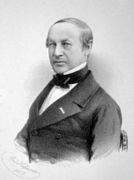
- Matthias Jakob Schleiden
- Theodor Schwann
- Yoshinori Ohsumi
- Jan Evangelista Purkyně
Encounter also [edit]
- The American Guild for Prison cell Biology
- Cell biophysics
- Prison cell disruption
- Prison cell physiology
- Cellular adaptation
- Cellular microbiology
- Plant of Molecular and Cell Biological science (disambiguation)
- Meiomitosis
- Organoid
- Outline of cell biological science
Notes [edit]
- ^ Alberts, Bruce; Johnson, Alexander D.; Morgan, David; Raff, Martin; Roberts, Keith; Walter, Peter (2015). "Cells and genomes". Molecular Biology of the Jail cell (sixth ed.). New York, NY: Garland Science. pp. 1–42. ISBN978-0815344322.
- ^ Bisceglia, Nick. "Cell Biology". Scitable. www.nature.com.
- ^ Hooke, Robert (September 1665). Micrographia.
- ^ a b Chubb, Gilbert Charles (1911). . In Chisholm, Hugh (ed.). Encyclopædia Britannica. Vol. 7 (11th ed.). Cambridge University Press. p. 710.
- ^ a b Gupta, P. (one December 2005). Cell and Molecular Biology. Rastogi Publications. p. eleven. ISBN978-8171338177.
- ^ Paez-Espino D, Eloe-Fadrosh EA, Pavlopoulos GA, Thomas Advertising, Huntemann Thousand, Mikhailova N, Rubin East, Ivanova NN, Kyrpides NC (August 2016). "Uncovering World's virome". Nature. 536 (7617): 425–30. Bibcode:2016Natur.536..425P. doi:10.1038/nature19094. PMID 27533034. S2CID 4466854.
- ^ Lavanya, P. (1 December 2005). Prison cell and Molecular Biology. Rastogi Publications. p. 11. ISBN978-8171338177.
- ^ a b c d e f Cooper, Geoffrey Thousand. (2000). "Tools of Cell Biology". The Cell: A Molecular Approach. 2nd Edition.
- ^ McKinnon, Katherine M. (21 Feb 2018). "Menstruation Cytometry: An Overview". Current Protocols in Immunology. 120: v.1.1–v.one.eleven. doi:10.1002/cpim.40. ISSN 1934-3671. PMC5939936. PMID 29512141.
- ^ Doble, Mukesh; Gummadi, Sathyanarayana Northward. (5 Baronial 2010). Biochemical Engineering. New Delhi: Prentice-Hall of India Pvt.Ltd. ISBN978-8120330528.
- ^ Kaneshiro, Edna (2 May 2001). Cell Physiology Sourcebook: A Molecular Approach (3rd ed.). Academic Printing. ISBN978-0123877383.
- ^ a b c d Nelson, Daniel (22 June 2018). "The Departure Betwixt Eukaryotic And Prokaryotic Cells". Scientific discipline Trends. doi:10.31988/scitrends.20655. S2CID 91382191.
- ^ Griffiths, Anthony J.F.; Miller, Jeffrey H.; Suzuki, David T.; Lewontin, Richard C.; Gelbart, William M. (2000). "Bacterial conjugation". An Introduction to Genetic Assay. 7th Edition.
- ^ De Rooij, Johan (25 June 2019). "F1000Prime recommendation of Force Triggers YAP Nuclear Entry by Regulating Transport across Nuclear Pores". doi:10.3410/f.732079699.793561846. S2CID 198355737.
- ^ "Nucleus". Genome.gov . Retrieved 27 September 2021.
- ^ "Endoplasmic Reticulum (Rough and Smooth) | British Society for Prison cell Biology". Retrieved half dozen October 2019.
- ^ Studios, Andrew Rader. "Biology4Kids.com: Cell Structure: Endoplasmic Reticulum". www.biology4kids.com . Retrieved 27 September 2021.
- ^ "Powerhouse of the cell has self-preservation mechanism". EurekAlert! . Retrieved 27 September 2021.
- ^ Pelley, John W. (2007), "Citric Acrid Cycle, Electron Send Chain, and Oxidative Phosphorylation", Elsevier's Integrated Biochemistry, Elsevier, pp. 55–63, doi:10.1016/b978-0-323-03410-4.50013-4, ISBN9780323034104
- ^ Cooper, Geoffrey M. (2000). "The Golgi Apparatus". The Cell: A Molecular Arroyo. 2d Edition.
- ^ Verity, Yard A. Lysosomes: some pathologic implications. OCLC 679070471.
- ^ "Ribosome | cytology". Encyclopedia Britannica . Retrieved 27 September 2021.
- ^ The Jail cell A MOLEQULAR APPROACH. Geoffrey Yard Cooper. 2000.
- ^ Cooper, Geoffrey M. (2000). "Transport of Small Molecules". The Cell: A Molecular Approach. 2nd Edition.
- ^ "What Are the Master Functions of Cilia & Flagella?". Sciencing . Retrieved 23 November 2020.
- ^ a b Ahmad, Maria; Kahwaji, Chadi I. (2019), "Biochemistry, Electron Send Chain", StatPearls, StatPearls Publishing, PMID 30252361, retrieved 20 October 2019
- ^ Schlessinger, Joseph (Oct 2000). "Cell Signaling by Receptor Tyrosine Kinases". Cell. 103 (2): 211–225. doi:10.1016/s0092-8674(00)00114-8. ISSN 0092-8674. PMID 11057895. S2CID 11465988.
- ^ Shackelford, R E; Kaufmann, W Grand; Paules, R South (February 1999). "Jail cell bicycle control, checkpoint mechanisms, and genotoxic stress". Environmental Wellness Perspectives. 107 (suppl 1): five–24. doi:10.1289/ehp.99107s15. ISSN 0091-6765. PMC1566366. PMID 10229703.
- ^ a b Bernstein C, Bernstein H, Payne C. Cell immortality: maintenance of cell division potential. Prog Mol Subcell Biol. 2000;24:23-50. doi:ten.1007/978-3-662-06227-2_2. PMID 10547857.
- ^ Avise JC. Perspective: The evolutionary biology of aging, sexual reproduction, and Dna repair. Development. 1993 Oct;47(five):1293-1301. doi: x.1111/j.1558-5646.1993.tb02155.10. PMID 28564887.
- ^ "The Cell Bike - Phases - Mitosis - Regulation". TeachMePhysiology . Retrieved vii October 2021.
- ^ "What is Pathology?". News-Medical.net. 13 May 2010. Retrieved 21 September 2021.
- ^ Nurse, Paul (7 January 2000). "A Long Twentieth Century of the Cell Cycle and Beyond". Cell. 100 (1): 71–78. doi:10.1016/S0092-8674(00)81684-0. ISSN 0092-8674. PMID 10647932. S2CID 16366539.
- ^ Cimprich, Karlene A.; Cortez, David (August 2008). "ATR: an essential regulator of genome integrity". Nature Reviews Molecular Jail cell Biology. ix (8): 616–627. doi:10.1038/nrm2450. ISSN 1471-0080. PMC2663384. PMID 18594563.
- ^ a b c Giacomello, Marta; Pyakurel, Aswin; Glytsou, Christina; Scorrano, Luca (eighteen Feb 2020). "The prison cell biological science of mitochondrial membrane dynamics". Nature Reviews Molecular Jail cell Biology. 21 (four): 204–224. doi:10.1038/s41580-020-0210-7. ISSN 1471-0072. PMID 32071438. S2CID 211170966.
- ^ Yous, Zhongsheng; Bailis, Julie M. (July 2010). "DNA damage and decisions: CtIP coordinates Dna repair and prison cell bike checkpoints". Trends in Cell Biology. 20 (7): 402–409. doi:10.1016/j.tcb.2010.04.002. ISSN 0962-8924. PMC5640159. PMID 20444606.
- ^ Glick, Danielle; Barth, Sandra; Macleod, Kay F. (3 February 2010). "Autophagy: cellular and molecular mechanisms". The Journal of Pathology. 221 (i): three–12. doi:10.1002/path.2697. ISSN 0022-3417. PMC2990190. PMID 20225336.
- ^ Yoshii, Saori R.; Mizushima, Noboru (28 August 2017). "Monitoring and Measuring Autophagy". International Periodical of Molecular Sciences. 18 (9): 1865. doi:ten.3390/ijms18091865. ISSN 1422-0067. PMC5618514. PMID 28846632.
- ^ Perrone, Lorena; Squillaro, Tiziana; Napolitano, Filomena; Terracciano, Chiara; Sampaolo, Simone; Melone, Mariarosa Anna Beatrice (thirteen August 2019). "The Autophagy Signaling Pathway: A Potential Multifunctional Therapeutic Target of Curcumin in Neurological and Neuromuscular Diseases". Nutrients. eleven (8): 1881. doi:10.3390/nu11081881. ISSN 2072-6643. PMC6723827. PMID 31412596.
- ^ Levine, Beth; Kroemer, Guido (11 January 2008). "Autophagy in the Pathogenesis of Disease". Cell. 132 (1): 27–42. doi:10.1016/j.cell.2007.12.018. ISSN 0092-8674. PMC2696814. PMID 18191218.
References [edit]
- Penner-Hahn, James E. (2013). "Chapter 2. Technologies for Detecting Metals in Unmarried Cells. Department 4. Intrinsic Ten-Ray Fluorescence". In Bani, Lucia (ed.). Metallomics and the Prison cell. Metal Ions in Life Sciences. Vol. 12. Springer. pp. xv–twoscore. doi:ten.1007/978-94-007-5561-1_2. ISBN978-94-007-5560-4. PMID 23595669. electronic-book ISBN 978-94-007-5561-1 ISSN 1559-0836electronic-ISSN 1868-0402
- Cell and Molecular Biological science by Karp fifth Ed., ISBN 0-471-46580-1
-
 This article incorporates public domain material from the NCBI document: "Science Primer".
External links [edit]
- Cell Biology at Curlie
- Aging Cell
- "Francis Harry Compton Crick (1916-2004)" by A. Andrei at the Embryo Projection Encyclopedia
- "Biology Resource By Professor Lin."
Source: https://en.wikipedia.org/wiki/Cell_biology
Posted by: mabreyyoulded.blogspot.com
0 Response to "What Is The Function Of The Microtubule In An Animal Cell"
Post a Comment