

How Do Animals Adapt To Their Environment
Fauna adaptation
What is animal adaptation?
When the weather gets cold, y'all put on a coat to go along warm. If information technology's hot, you lot habiliment a hat or fan yourself to absurd down. Those are both ways of adapting to your habitat. While animals don't take dress, they do have born means of keeping the right temperature and protecting themselves in the habitat they live in.
Over many years and generations, animals have changed in order to survive and thrive in the environments they live in. This process is called accommodation.
There are a number of ways that animals accommodate – these can be inside our exterior their bodies, in ways that they act, or fifty-fifty in ways that they work with other animals in their habitat. If you all of a sudden took an animal outside its habitat into something completely dissimilar, all those adaptations wouldn't work anymore, and information technology wouldn't exist good for the animal. It's the same equally if y'all dressed in your warmest coat and woolly hat and scarf in the eye of August – you'd be much too hot!
Every habitat on our planet is home to different animals and plants who are uniquely adapted to alive at that place.
Pinnacle ten facts
- In gild to survive, animals demand to make sure they have food, water, oxygen, shelter, and a place to raise their offspring.
- Animal accommodation describes all the ways that animals know how to survive in their habitat.
- Animal adaptation doesn't happen immediately – it's taken many years of new generations of animals being built-in with characteristics that have suited their habitat better.
- The same kind of animate being, like an owl, tin have many different species that are each adjusted to different habitats. Owls alive all over the globe in many different climates.
- Animals likewise adapt to their habitat through having special congenital-in things about themselves that protect themselves from predators. This can exist poison that forms naturally on their skin, or only knowing the all-time places to hide when it'southward time for a nap.
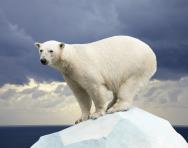
- Camouflage is one way animals have adjusted to their surroundings – they've started looking like it! For example, animals that live in the Arctic often have white fur, which matches the colour of snow.
- Animals have had to adapt to the climate they alive in, too. If it's always very common cold, they sometimes have an actress layer of fatty to help keep them warm (like polar bears do).
- If a habitat gets too cold during the winter, some animals have adapted past just leaving it! They come up dorsum when it warms up over again. This is called migration.
- Animals can also adapt by working together with other animals – this is called symbiosis. Each animate being has something that the other needs, and they help each other survive. Information technology's good teamwork!
- Plants adapt to their environment, as well. For instance, cacti in the desert accept adapted by not needing much water to survive.

Boost Your Child's Learning Today!
- Start your kid on a tailored learning plan
- English & maths resources delivered each week to your dashboard
- Keep your child's learning on rails
Did you know?
An animal'south habitat is its dwelling house. Information technology'south where it can find all the things it needs to survive:
- food – this tin be plants, or other animals and insects, or all of those things
- water – this can exist from a lake or river, or fifty-fifty the side of a establish
- oxygen – air to breathe
- shelter – a place to stay dry, to sleep, and to stay prophylactic from predators
- a place to raise their offspring (babies) – a place where immature animals tin can grow up safely and with all of the things they need
The reason why animals are happiest when they're living in their natural habitat is because they've adapted to be comfortable there. They're used to all of the funny things almost it, and it's their favourite identify on World.
Adaptation takes a very long time – information technology's function of how animals have evolved, and how dissimilar species of animals have come to be.
Animals are frequently the same color as their habitat – and some tin can even alter their color to match where they're sitting! This is called camouflage. For example, lots of animals in the rainforest are green – this is considering the rainforest is mostly green.
Animals have camouflage then they can hide from anything trying to consume them for dinner, and also and then they can hunt for food and take hold of their dinner past surprise. Different kinds of camouflage are:
- Blending into the background – having patterns on skin that await similar the things around them; for example, turtle shells can expect like rocks when they constrict their caput and legs inside.
- Mimicking the habitat – looking like a plant that belongs in the habitat; for example, stick insects really look like sticks, which means their predators walk away thinking, 'I don't want to eat that stick…'
In habitats that go very common cold, animals adjust past hibernating (sleeping for upward to a few months at a fourth dimension), or by migrating. Migrating is when they go out the habitat for some other one that's a better temperature for them, similar when birds fly south during the winter. They'll go to a warm spot, merely as that gets besides hot they'll fly back northward where information technology'south cooler, but not every bit cold as when they left. That's why we come across all the birds come up back in the leap!
Look through the gallery below and run into if you tin can spot the following:
- A dromedary camel with its very long eyelashes, and nostrils that can open up and close
- The fennec flim-flam'southward long ears
- A jackrabbit's long ears and powerful hind legs that help it motility very quickly
- A raccoon
- This wood frog's skin looks a lot like the branch it's sitting on
- A porcupine and its quills
- A giraffe reaching leaves way up in the tree
- Black circles around a meerkat's eyes
- A lioness'due south sandy-coloured fur and long, rough tongue
- A stingray that's cached itself in the bounding main floor
- Clownfish in anemone tentacles
- A ocean urchin's spiky crush
- Emperor penguins huddling together to keep warm
- Yous can barely see the snowy owl in the snow… and behind all its feathers!
- A tapir swimming with its long nose held upwards out of the water
Gallery
Well-nigh
Adaptations tin can be lots of dissimilar things, simply they commonly fall into one of these groups:
- Structural – things about animate being inner and outer bodies that have helped them adapt to their surround, such equally a giraffe's tall neck that ways it tin can eat leaves on tall trees.
- Physiological – special ways that animals' bodies work to help them survive in whatever condition they're in, such as camels in the desert conserving water and existence able to get days without drinking.
- Behavioural – things that animals do that brand life a lot easier in their habitat, such every bit meerkats in living in the basis then they stay safe from predators
Ways animals adapt in desert habitats:
- A dromedary camel can beverage 30 gallons of h2o in 10 minutes. It besides stores fat in its hump for extra free energy (non h2o!), and can open and shut its nostrils and then it doesn't breathe in sand when at that place's a windstorm. Camels also accept long eyelashes that bat sand away.
- The fennec fob has very long ears that help information technology proceed absurd by spreading out trunk rut. It too has special sorts of kidneys that conserve water, and so the fox doesn't demand to drink very often. They as well accept thick fur on the lesser of their feet so they can walk over the hot desert ground.
- Jackrabbits are nocturnal animals, considering it's cooler in the evening and easier to hibernate from predators. They mostly slumber during the twenty-four hour period, and they are herbivores. They eat plants that accept a lot of water in them, then they don't need to worry about finding water anywhere else in the dry desert. Jackrabbits take big ears, similar the fennec flim-flam. If they're trying to get away from a predator, they movement very quickly in a zigzag blueprint to effort to get away.
Ways animals suit in forest and woodland habitats:
- Raccoons are nocturnal animals, and they have very good eyesight which helps them run into at night. They are omnivorous and eat everything the woods has to offering – from basics and berries on trees to fish in streams. They store up fat so they can sleep for a month or so at a fourth dimension in the colder winter months, and they can even share a winter den with other animals like opossums and muskrats so everyone stays warm.
- Wood frogs accept camouflaged skin so they blend into the groundwork very well. They have a layer of mucous on their peel so they can slip away from predators. They can also hibernate in the winter when their habitat gets also common cold for comfort.
- Porcupines are basically rodents (similar rats) but they have a actually amazing way to defend themselves. They've got almost thirty,000 sharp quills on their bodies that they can raise upward to ward off a predator, but if the predator gets likewise close, the quills will stick direct onto its face up. Ouch! Porcupines also like eating bawl and twigs, so they've got sharp claws that help them climb upward trees better.
Ways animals suit in grassland habitats:
- Grasslands sometimes go a long time without h2o, but giraffes have adapted by not needing to drinkable h2o for weeks at a time. They can get by from the h2o in the leaves they swallow, which they tin can attain because of their super-long necks. Because giraffes are and so tall, they tin can also see for a long way effectually them, which is helpful in the grassland where there aren't many places to hide from predators.
- Meerkats live in areas that are about like deserts – hot, dry and not much vegetation. They have dark rings around their optics to finish glare from the sun, so they tin see well fifty-fifty when it's really vivid outside. Because at that place aren't many places to hide from predators, meerkats live in underground tunnels that give them a quick escape when they're on the run. Meerkats live in big colonies where they share out jobs similar minding babies, keeping watch for whatsoever danger and hunting for food.
- Fifty-fifty though lions are 'the kings', they have had to adapt to their habitat simply like all the other animals take. King of beasts's fur is the perfect sandy color to blend into the African savannah, so they tin sneak up on prey pretty easily. Lions talk to each other through their loud roar – information technology too sounds scary so any other predators know to steer articulate. Lions mostly sleep in the day to stay absurd, and they chase at night. When they do take hold of prey, they utilise their long claws as weapons and and then consume their fresh repast by licking off peel and meat with their rough tongue.
Ways animals adapt in marine habitats:
- Stingrays have flat bodies and swim along the sea floor. Their eyes are on the top of their torso, and their mouth is on the bottom – and then, they tin can run into around them as they're swimming along, and take in any nutrient along the ocean flooring. Since they're already at the lesser of the sea, they tin quickly bury themselves in dirt if a predator comes forth. The way they exhale allows them to yet take in oxygen even when they're cached.
- Clownfish have tiny round fins and tin't swim very quickly, but they are able to become away from predators by going somewhere they can't – a sea anemone with poisonous tentacles. Clownfish can do this considering they have a layer of fungus over their scales that means the anemone doesn't touch them. Clownfish can also olfactory property the anemone, so they know immediately when 1 is nearby fifty-fifty if they tin't run into information technology.
- Sea urchins immediately put off predators because they've got spiny, spiky things coming out from a beat out that completely covers their body. They can control their spikes and point them in the direction where they think they're being threatened, also. They have special tube-like feet that suction them onto things and then the water current doesn't toss them around. They've also got 5 teeth on the bottom of their trunk so they can break down nutrient while their shell protects them from in a higher place.
Ways animals suit in polar habitats:
- Polar bears in the Arctic take white fur that helps them blend into the snowy background. They likewise have a thick layer of fat effectually their body to go on warm, and big paws with long hair that keeps them from slipping on water ice. When there's a snowfall or windstorm, polar bears can dig deep dens that protect them from the conditions and keep them warm. Even though they're big animals, polar bears are good swimmers which means it's easier for them to catch fish to eat.
- Emperor penguins are famous for the style they've adapted to their chilly habitat in Antarctica. Their streamlined shape helps them swim quickly and catch fish to eat, and their feathers provide a waterproof layer that means they won't get also cold. When they're out of the water, their black feathers soak in warmth from the sunday, and penguins also swarm together in packs to help keep each other warm. They only lay 1 egg that they tin sit on while they wait for it to hatch, and mum and dad take turns sitting on the egg and going to get food to brand sure their little one has all the warmth they demand.
- The snowy owl, like the polar bear, is white all over which helps it alloy in with the snow. They've got layers of soft downward feathers covered with larger, thicker feathers that provide insulation from the cold. The snowy owl has feathers everywhere – even on its toes! It eats a variety of different small animals and so it's not fussy about what'due south for dinner, giving information technology the best take chances of having enough nutrient to survive.
Ways animals adapt in rainforest habitats:
- Toucans have very long beaks that are actually almost i-third of their entire body length. Just, these beaks are also lightweight, and mean that toucans can pick up large pieces of fruit, which they toss in the air and take hold of in the back of their beaks to swallow. Toucans' beaks also accept blood vessels in them and release body heat, helping to proceed them cool. Toucans keep balanced on trees in the rainforest by using their claws – two on the forepart and two on the dorsum – to get a good grip that keeps them from falling down.
- Howler monkeys are one of the loudest animals on earth, which is how they go their name! They alive up in the rainforest canopy, where it tin can be difficult to encounter very far around because there are lots of leaves and branches in the way. And then, they use their loud vocalism to call out to other howler monkeys, and to make sure other animals know where their territory is. They need to communicate with other howler monkeys because they all live in big communities – howler monkeys don't move around very quickly, so they need friends to help protect each other from predators. Howler monkeys also wrap their tails around tree branches to continue from falling down.
- Tapirs are larger rainforest animals that live on the wood floor. They are herbivores, so it's like shooting fish in a barrel for them to detect leaves, twigs and fruits to eat as they wander effectually. They take sloped shoulders that let them to move around under bushes and shrubs, and small eyes deep in sockets that protect them from insects and $.25 of copse getting in. Tapirs have a long, flexible nose that can root into trees and bushes to grab food. They can go into shallow h2o, and utilize their noses as a snorkel to exhale!
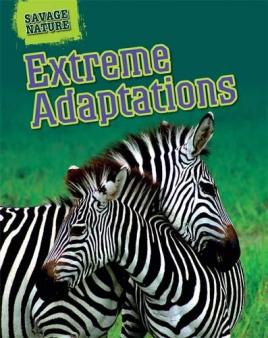
Animals tin as well adapt to their habitat past working together to survive – this is called symbiosis. For example, in the African savannahs, birds called oxpeckers sit on the backs of zebras to pick off lice and other bugs. Information technology's food for the oxpeckers, and the zebras can get rid of pests. Also, zebras tin can't see very well, just oxpeckers screech loudly when predators are approaching which gives zebras early warning to run away.
Words to know
- Adaptation – all the ways that animals can survive in their habitat
- Camouflage – ways that animals can be unnoticed by their predators, or by their prey
- Carnivore – an animal that eats meat
- Climate – the temperature and weather of a certain part of the world
- Evolve – how animals change over long periods of time past getting characteristics in their bodies or in the fashion the carry that helps them adapt to their habitat
- Habitat – a place where an creature, plant, insect or whatsoever other living affair lives; it can exist every bit big as an body of water, or equally tiny equally a log in a woods.
- Herbivore – an animal that simply eats plants, and things that abound on plants like fruit and berries
- Hibernation – long sleeps that animals accept in the wintertime to conserve oestrus and survive the chilliest months of the twelvemonth
- Migration – travelling a long way to achieve a new habitat that suits an animal better than its one-time 1 did; birds migrate south every wintertime to exist in a warmer habitat, so they become back north in the spring
- Omnivore – an animal that eats both plants and meat
- Predator – something that hunts something else (its casualty)
- Prey – something that is attacked by something else (its predator)
- Species – a particular kind of animal; a barn owl and a snowy owl are both species of owl
- Symbiosis – the ways that ii species interact to assistance each other survive in their habitat
Related Videos
But for fun...
- Find a characteristic of a certain kind of animal, and work out what part of their habitat that characteristics help them to suit to.
- This game shows how animals in a forest depend on each other, and has a quiz about animal adaptation
- Complete an animal adaptations worksheet
- Have a KS2 creature accommodation quiz
- Adaptation dominoes and activities are included in a Marwell Wildlife learning pack
- Tin can you lot work out the evolutionary relationships linking different species together in Development Lab?
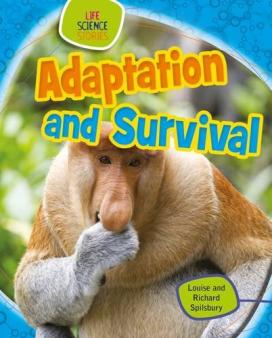
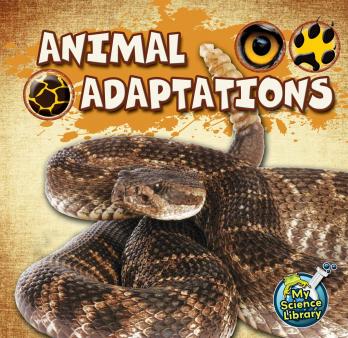
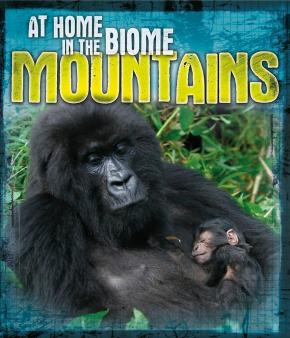
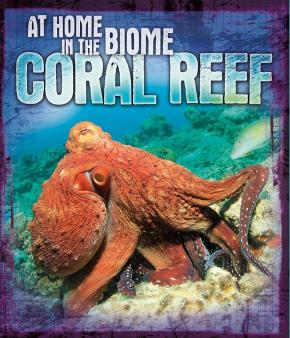
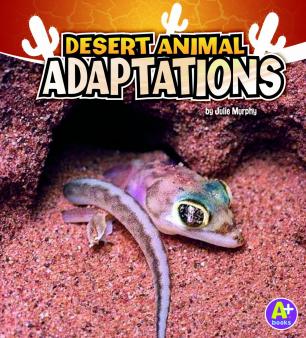
Best children'southward books about animal adaptation
Notice out more
- A BBC Bitesize animation to explicate evolution for KS2 children
- Download a fantastic fauna adaptation information pack from the Wildwood Trust
- Read well-nigh 5 amazing animal adaptations in the Galapagos Islands
- Videos and lots of information nearly animal and plant adaptations
- Watch adaptation, inheritance and development BBC Bitesize clips
- Evolution explained for children
- See how animals in the Arctic have adjusted.
- Watch a cartoon nearly how the brown conduct evolved into the polar bear
- Find out how a barn owl adapted to be a successful predator
- Short video clips most animal adaptations in desert habitats and kangaroo adaptation
- Empathise more nigh Antarctic creature adaptations
- Watch videos nigh animal adaptations and the environment and natural choice
- Information about biogeography
Come across for yourself
Discover out how how fauna cover-up works
See examples of animal camouflage in the rainforest
Vii examples of animal symbiosis
Also run into
Source: https://www.theschoolrun.com/homework-help/animal-adaptation
Posted by: mabreyyoulded.blogspot.com
0 Response to "How Do Animals Adapt To Their Environment"
Post a Comment