

Here's what the Pentagon's scrapped $10 billion JEDI contract means for Microsoft
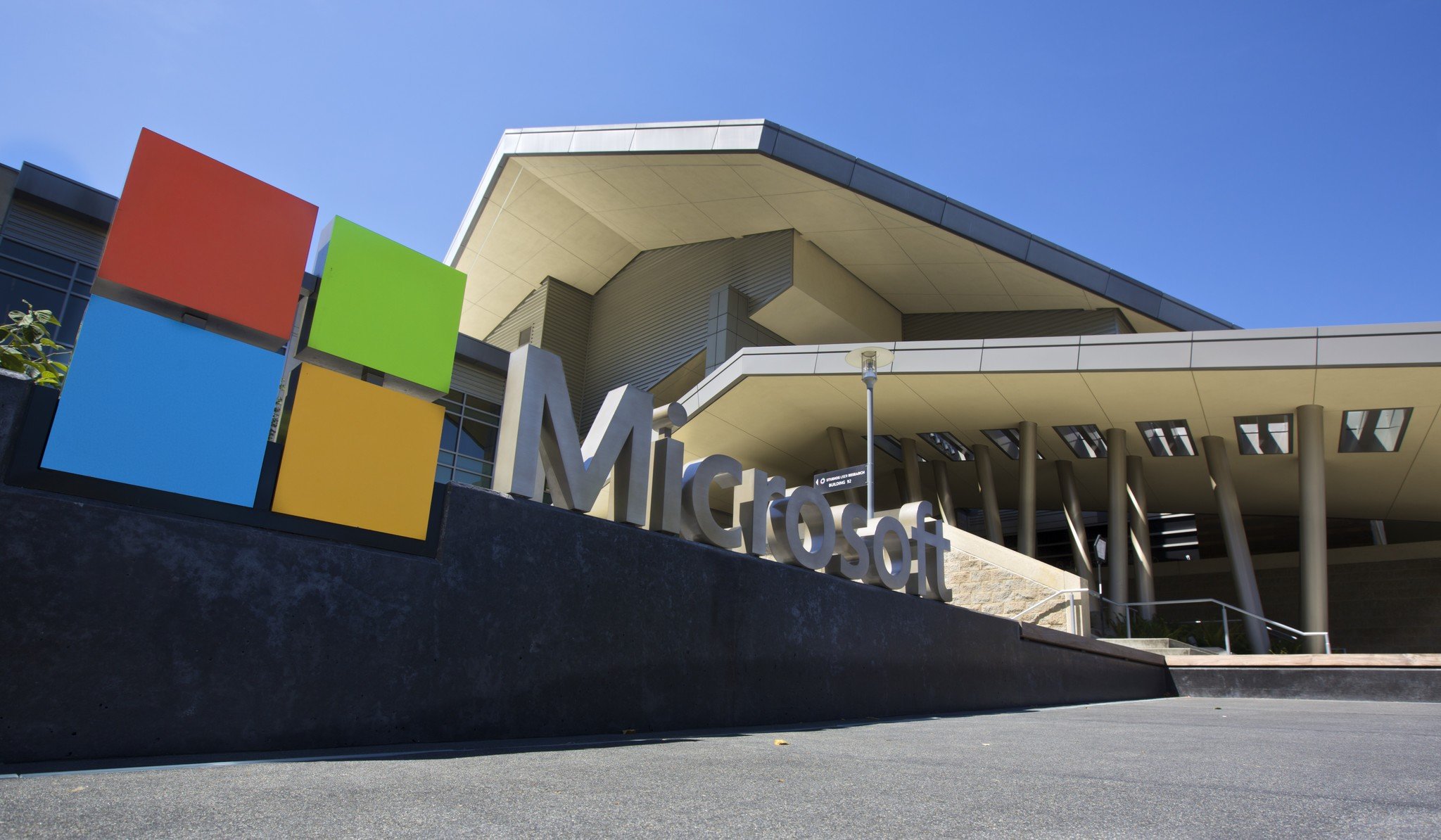 Source: Stephen Brashear/Getty Images for Microsoft
In 2022, the Pentagon awarded Microsoft its Joint Enterprise Defense Infrastructure (JEDI) contract, which had the potential to be worth $ten billion over 10 years. The contract'due south purpose was to help modernize the Section of Defence force's It infrastructure and cloud capabilities. Amazon, which lost out on the contract upon it being given to Microsoft, sued the Pentagon, claiming external factors unfairly influenced the awarding procedure.
The external factors Amazon felt influenced the process included then-U.S. President Donald Trump'due south public grudge with Jeff Bezos and, by extension, the Trump administration'southward issues with Amazon, which Bezos founded. There was also another chemical element of conflict to be constitute in Trump's criticisms of the Washington Mail service, which Bezos owns.
Amazon didn't allow upwards on the litigation forepart, stretching out its lawsuit all the way to 2022 until, at long last, the Pentagon canceled the contract entirely, ripping information technology away from Microsoft in the process.
"With the shifting technology environment, it has become clear that the JEDI Cloud contract, which has long been delayed, no longer meets the requirements to fill the DoD's adequacy gaps," the Pentagon said about the canceled contract, not addressing the legal troubles with Amazon.
However, mentioned or otherwise, the legal troubles' implications did — and yet do — loom over the DoD's actions. The question now is: How practise the tech companies involved movement forward from this? Windows Central spoke with experts to learn how JEDI'south cancellation volition impact Microsoft.
Microsoft JEDI contract: Financial context
 Source: Microsoft
Before addressing Microsoft's moves going forward, it'south important to better empathise what the company did and didn't lose equally a effect of JEDI's premature end. Nosotros reached out to Rosenblatt Securities' senior inquiry analyst John McPeake to become insights on the financial angle of the contract'southward termination.
He highlighted that the bargain had a minimum delivery of only 2 years and $1 million on the DoD'due south part. The $10 billion ceiling would only have been achieved if all the deal's options were exercised. He likewise provided context for the deal's value, stating that fifty-fifty if JEDI netted the maximum $1 billion in value per year for Microsoft, that'd only make up 3% of Azure'due south estimated revenues, which would translate to 0.5% of the company's overall estimated revenues for FY22.
Furthermore, one can't consider Microsoft totally out of luck since the DoD has announced its Joint Warfighter Cloud Capability (JWCC) contract every bit a replacement for JEDI, and has emphasized Microsoft volition likely exist involved in that deal, even though the tech behemothic will probably be sharing the contract with Amazon in some capacity. Plus, Microsoft still has its lucrative HoloLens contract in the works with the Pentagon.
Microsoft JEDI contract: Proficient views
 Source: Windows Key
Moor Insights & Strategy'southward senior analyst Anshel Sag weighed in on Microsoft's JEDI situation, emphasizing that hopefully, controversy and hints of scandal don't riddle the JWCC contract now that JEDI is in the rearview mirror.
"I remember the JEDI contract was awarded in a fashion that jeopardized the validity of the procedure," Sag said. "While I don't necessarily think it was necessary to take information technology abroad from Microsoft, I practice believe that information technology would've been better to have a multi-cloud vendor solution. While it isn't entirely clear who will bid on this contract again, I hope that the all-time two vendors are selected and that political preferences don't play into the decision procedure which appeared to happen the first fourth dimension."
A senior analyst at Forrester, Tracy Woo, gave insights about JEDI'southward cancellation's micro and macro implications for Microsoft. Her thoughts aligned with McPeake'due south opinion that any fallout or bear on is negligible.
"As a whole, null changes," Woo said. "This was a prolonged legal battle with no stop in sight. The regime had already listed out AWS and Azure as the only two candidates able to come across the requirements it needs currently. So it's not a rebuke on Microsoft and its capability to deliver a cloud infrastructure overhaul, but more recognition that the Pentagon desperately needs its technology updated and that the JEDI agreement was non delivering on that promise."
Woo as well remarked on the JWCC contract's multi-vendor, controversy-fugitive approach, sharing a similar stance to Sag on the thing.
"On another note, the fact that the Pentagon is now appearing open up to a multicloud arroyo of using multiple public deject vendors is a smart motion, not only for security, reliability, and availability reasons but also because it is probable to exist a less incendiary upshot when the contract(s) are awarded."
Microsoft JEDI contract: Non a full loss
 Source: Daniel Rubino / Windows Central
The cancellation of JEDI is, in no uncertain terms, a win for Amazon simply considering it denies the opposing company a clear victory besides every bit reopens the door for the Microsoft rival to score a deal with the DoD.
What Amazon's achievement will mean for Microsoft with regards to the JWCC contract and time to come deals remains to be seen, but equally far as the spilled milk that is JEDI goes, it can be argued that zilch too major was lost — this time effectually.

Just the all-time
Cheque out Windows Primal'south Best of MWC 2022 picks!
Another Mobile World Congress is in the books, and this twelvemonth information technology brought plenty of exciting announcements from Lenovo and Huawei. Here'due south a look at what caught our attention, earning Windows Central'southward Best of MWC 2022 awards.

Under assail
Stolen NVIDIA data is being used to bypass Windows security
Some of the data leaked by ransomware group Lapsus is being used past cyber attackers to featherbed Windows security measures. Two code-signing certificates were leaked, which are now being used to brand malicious files appear genuine.

Source: https://www.windowscentral.com/heres-what-pentagons-scrapped-10-billion-jedi-contract-means-microsoft
Posted by: mabreyyoulded.blogspot.com
0 Response to "Here's what the Pentagon's scrapped $10 billion JEDI contract means for Microsoft"
Post a Comment